Vanishing Act: How Ghosting Became Dating's Most Cowardly Habit — And How to Actually Stop It
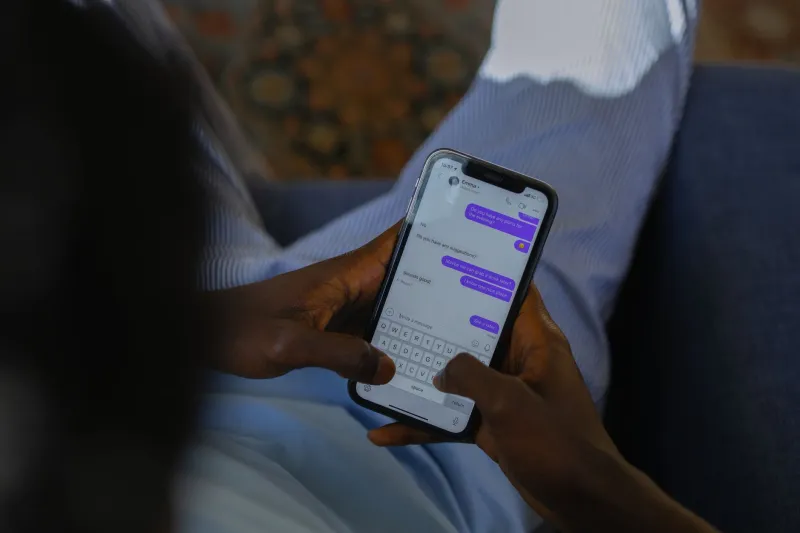
Somewhere between the third date and the follow-up text, a person just... stops existing. No explanation. No closure. Not even a courtesy "hey, I'm not feeling it." Just silence — the digital equivalent of walking out mid-sentence and never coming back.
Welcome to modern dating in America, where ghosting has become so normalized that people are genuinely surprised when someone actually tells them the truth.
Let's talk about what's really going on here.
It's Not Just Rude — It's a Full-On Epidemic
The numbers don't lie. Multiple surveys over the past few years have found that somewhere between 50% and 80% of people in the dating pool have either been ghosted, done the ghosting, or both. That's not an outlier behavior anymore. That's just... dating.
And it's not limited to one-night situations or early app exchanges, either. People are getting ghosted after weeks of texting, after multiple dates, after sleeping together, after meeting the friends. The bar for when ghosting becomes acceptable has somehow slipped so low it's underground.
The apps made it easy, sure. But blaming Tinder or Hinge for ghosting culture is like blaming the highway for road rage. The technology didn't invent emotional avoidance — it just gave it a faster lane.
Why People Ghost (And It's Not Always About You)
Here's the uncomfortable truth: most ghosters aren't sociopaths. They're just conflict-averse people who've convinced themselves that disappearing is somehow kinder than honesty.
The psychology behind it is actually pretty straightforward. Telling someone you're not interested feels bad. It's awkward. You might have to deal with pushback, sadness, or an angry response. Ghosting sidesteps all of that — at least for the person doing it. The discomfort gets outsourced entirely to whoever's left waiting for a text that never comes.
There's also the paradox of choice factor. When you've got 47 matches on three different apps, each individual person starts to feel more disposable. It's harder to feel accountable to someone when you've never really had to sit across from them and see them as a full human being. Screens create distance, and distance makes it easier to justify shitty behavior.
Some people ghost because they're genuinely scared of confrontation — they've never been taught how to have a hard conversation without it turning into a blowup. Others do it because they're juggling multiple people and just... let one drop. And yeah, some are just lazy. But most ghosters aren't cackling villains. They're people who took the easy exit because nobody ever handed them a better option.
What It Actually Does to the Person Left Behind
Getting ghosted isn't just annoying. For a lot of people, it genuinely messes with their heads.
The human brain is wired to seek resolution. When a relationship — even a casual one — ends without explanation, your mind fills in the blanks. And it almost never fills them in generously. "Maybe I said something wrong. Maybe I'm too much. Maybe I'm not enough." The spiral is real, and it can hit harder than a clean rejection ever would.
Researchers have compared the psychological experience of ghosting to social rejection in its most destabilizing form — because you never get to process it. There's no conversation, no closure, no chance to understand what happened. You're just left holding a bunch of unanswered questions and a read receipt from three weeks ago.
For people who already deal with anxiety or attachment issues, being ghosted can reinforce some genuinely toxic beliefs about themselves and relationships. It's not dramatic to say it does damage. It does.
But Ghosters Aren't Off the Hook Either
Here's something people don't talk about enough: ghosting doesn't actually feel great for the person doing it, either.
Avoidance is a short-term fix with long-term costs. Every time you ghost someone instead of having a real conversation, you're reinforcing the idea that difficult emotions are something to be escaped rather than handled. You're building a reflex. And that reflex doesn't stay contained to dating — it bleeds into friendships, work relationships, family dynamics.
People who ghost habitually often report feeling vaguely guilty, even when they tell themselves the other person will get over it. That guilt tends to sit unprocessed. Over time, the pattern of avoidance can make it harder and harder to show up authentically in any relationship, because you've trained yourself to run the second things get even slightly uncomfortable.
Ghosting is a habit. And like most bad habits, it gets easier every time you do it.
The "New Normal" Argument Is Lazy
Some people shrug and say ghosting is just how it is now — that everyone knows the rules and nobody should expect more. That's a convenient take if you're the one doing the disappearing.
The reality is that "everyone does it" has never been a solid ethical argument. Lots of people do lots of shitty things. Normalizing a behavior doesn't make it less shitty — it just makes it more common.
The fact that ghosting is widespread doesn't mean we should accept it as the ceiling of how we treat each other. It means we should probably do better.
How to Actually Break the Cycle
So what does "doing better" actually look like in practice? Because telling people to "just communicate" without giving them tools is useless advice.
Keep it short and honest. You don't owe anyone a dissertation. "Hey, I'm not feeling the connection — hope you find what you're looking for" is enough. It takes about 30 seconds to type and it's infinitely more decent than silence.
Do it sooner rather than later. The longer you wait, the harder it feels and the more damage you're doing. Rip the bandage off early.
Stop over-romanticizing your own discomfort. Yes, rejection conversations are awkward. That's allowed. Awkward isn't the same as catastrophic. You can survive a slightly uncomfortable exchange, and so can they.
Recognize when you're in avoidance mode. If you've been "meaning to respond" for two weeks, you're not busy — you're ghosting in slow motion. Own it and make a decision.
Set the standard you want in return. If you want people to be straight with you — and most people do — then be straight with them. It's not complicated. It's just reciprocal.
The Bottom Line
Ghosting is easy. That's literally its only selling point. It's emotionally cheap, it's unkind, and it's making everyone in the dating pool a little worse at being honest with each other.
We've built a culture where the path of least resistance is to just disappear, and then we act confused about why dating feels so hollow and transactional. Those things are connected.
You don't have to be perfect at communication. You just have to be willing to try. Send the awkward text. Have the short, honest conversation. Be the person you'd want to date.
It's not that hard. It's just that most people haven't decided it matters yet.
Decide it matters.